
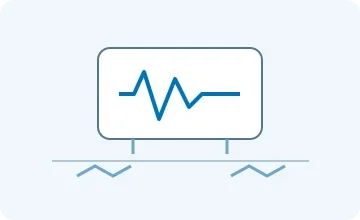
Is the weight reading fluctuating?
The supporting surface may also be a cause. A dedicated anti-vibration design helps limit mechanical influences on the balance.
PRECIZ · Two standard versions
Two standard versions are available: the fixed PTM weighing table and the ergonomic PTML table with an adjustable front support. Both have an AISI304 stainless steel frame and a separate granite slab for the balance. Alongside the standard versions, we also manufacture custom-made tables.
Why a dedicated table?
Footsteps, pumps, ventilation and nearby machinery can generate vibrations that reach the balance through the floor and furniture. This may cause fluctuating readings, longer waits for a stable value and reduced measurement repeatability.
An anti-vibration weighing table helps reduce the transmission of these disturbances to the weighing surface. This is particularly important when weighing small samples and using sensitive laboratory balances.
The supporting surface may also be a cause. A dedicated anti-vibration design helps limit mechanical influences on the balance.

If vibration causes the delay, a suitable supporting surface can help the reading stabilise sooner.

We adapt the worktop dimensions to provide space for samples and accessories alongside the balance.
Standard ergonomic version with adjustable support
The standard PTML1250800750 version combines an AISI304 stainless steel frame, a worktop, a separate granite slab and a padded front support. The front support height is electrically adjusted using a digital controller, allowing the arm position to suit the user and the task.
| Model | PTML1250800750 |
| Workstation dimensions (width × depth × height) | 1250 × 800 × 750 mm |
| Granite slab | 500 × 450 mm |
Lifting columns allow the front support height to be adjusted. This lets you adapt the arm position for sample preparation and weighing.
The contoured front support with a central cut-out allows closer access to the work surface and supports the forearms during repetitive laboratory tasks.
The controller beneath the right-hand edge of the support has up and down buttons, three height memory positions and a display of the current height.
This version is intended for laboratory workstations where users prepare samples, handle small containers or perform consecutive weighing operations. It combines a dedicated balance base with an ergonomic arrangement of the space in front of it.
In addition to the standard version, we can adapt the table and slab dimensions and the work surface material and colour. We also offer a stainless steel work surface for demanding environments.
Enquire about the adjustable support versionStandard fixed version
The standard PTM1250800750 weighing table has an AISI304 stainless steel frame, a worktop and a separate granite slab for the balance. It is intended for workstations requiring a permanent, dedicated weighing base.
The standard dimensions are shown below. If you need different dimensions or a different work surface colour or material, we can manufacture a customised version.
| Model | PTM1250800750 |
| Table dimensions | 1250 × 800 × 750 mm (width × depth × height) |
| Granite slab | 540 × 450 mm |
| Frame | AISI304 stainless steel |
Types of balances and instruments
From analytical balances to dedicated weighing systems, we select the table according to the sensitivity, dimensions, loads and operating conditions of the instrument.
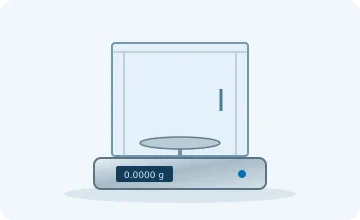
Analytical balances are used for laboratory sample preparation, formulation and quality control. These procedures require reliable mass determination for relatively small quantities.
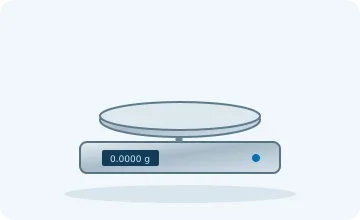
Precision balances cover a broad range of weighing tasks. Depending on the model, they can also handle larger loads and are used in routine laboratory work and quality control.
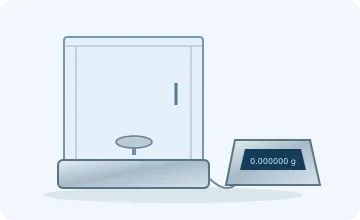
Microbalances are used where very small changes in mass must be detected reliably. Instrument location, a stable base, still air and temperature conditions are therefore particularly important.
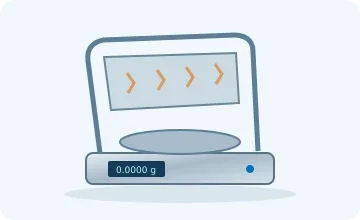
Moisture analysers determine moisture content using an appropriate measurement procedure. A stable base and a well-planned equipment layout support everyday sample preparation and measurement.
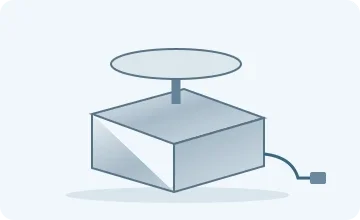
When using a weighing module, its installation must be planned together with the associated equipment. Dimensions, mounting arrangements and the requirements of the complete measurement procedure are important.
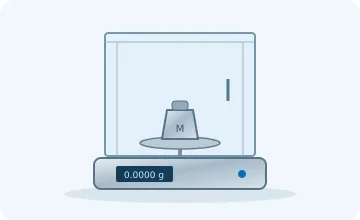
Mass comparators are intended for highly precise mass comparisons. In addition to a stable environment, controlled placement and safe handling of weights are important.
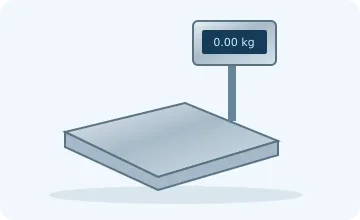
Industrial scales and weighing platforms may operate in rooms where nearby machinery or floors transmit vibration to the measuring station. Suitable support depends on the instrument and the nature of these disturbances.
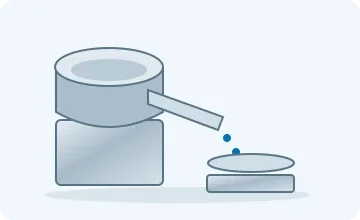
An automatic feeder is an accessory that must be positioned correctly relative to its balance. The relationship between the instrument, feeder and other equipment is important in this arrangement.
Who are they for?
The need for a weighing table depends on the sensitivity of the balance, the procedure and the conditions in the room.
For sample preparation, formulation and weighing small quantities with analytical balances or microbalances.
For routine measurements where a repeatable workflow and a stable weighing station are important.
For experiments and measurements of small mass differences where mechanical disturbances may make results harder to evaluate.
For mass comparisons and working with weights, where environmental stability and safe handling require particular attention.
For sample preparation and the use of precision balances or moisture analysers where conditions call for a dedicated stable base.
For selected scales and platforms in environments with mechanical disturbances. The design must suit the loads and the source of vibration.
How does it work?
In a typical anti-vibration design, a solid weighing base is separated from the supporting structure by damping elements. This helps reduce the transmission of certain vibrations to the balance.
When designing the table, we consider the balance dimensions and the space required for everyday work. We size the balance slab and surrounding worktop according to your requirements.
Custom manufacture
Alongside the two standard versions, we also manufacture custom-made weighing tables. We adapt the table and slab dimensions as well as the work surface material and colour. For demanding environments, we also offer a stainless steel (INOX) work surface.
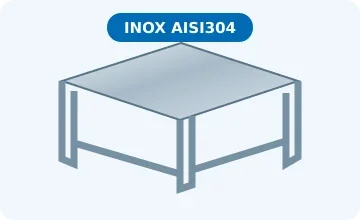
We manufacture the frame from AISI304 stainless steel. The tables are suitable for use across industries, from pharmaceuticals and laboratories to food processing. We adapt the design to the conditions and working methods.
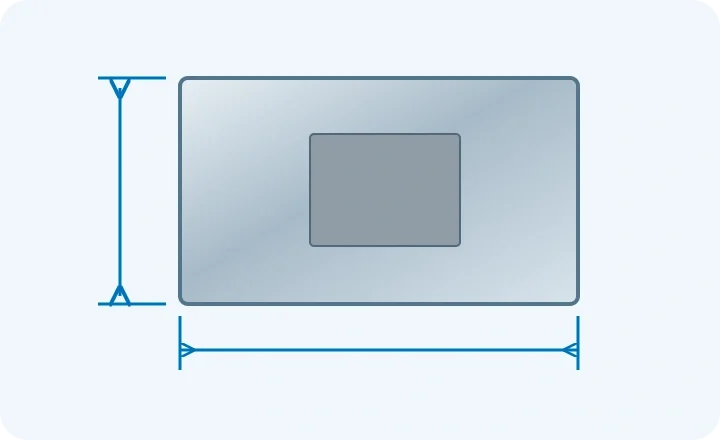 Width · custom-madeDepth · custom-made
We adapt the work surface to your space and working methods: we establish the required dimensions and select the material and colour. A stainless steel work surface is also available for demanding environments.
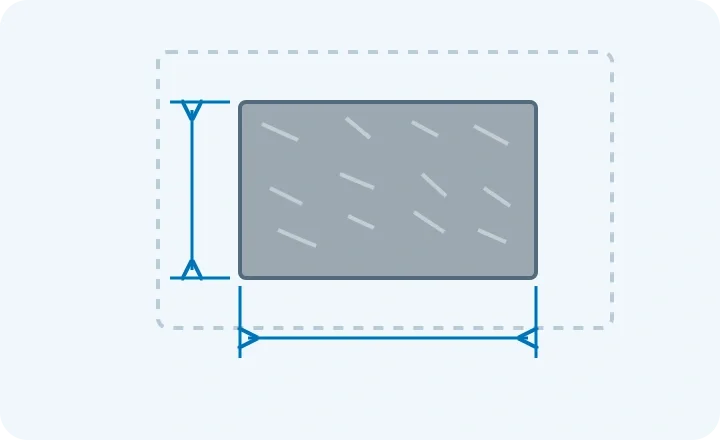 Width · custom-madeDepth · custom-made
We adapt the width × depth of the slab to your balance, planning the dedicated weighing area and the rest of the work surface as a whole.
Making the right choice
Choose the fixed PTM version for a permanent weighing station or the ergonomic PTML version with an adjustable front support. If the standard dimensions or work surface do not suit your procedure, we can manufacture a custom-made table.
The complete measurement environment
An anti-vibration table reduces the influence of certain mechanical disturbances. Stable measurements also require suitable surrounding conditions: prevent draughts, limit temperature fluctuations, control electrostatic charges and correctly level and use the balance.
Choosing a table therefore means considering more than the table itself. Its location and your everyday weighing procedure matter too.
Frequently asked questions
Not necessarily. It depends on the balance, the procedure requirements and disturbances in the room. It is particularly useful for sensitive analytical balances and microbalances, or where vibration affects reading stability.
Mass alone does not guarantee an anti-vibration effect. The design, separation of the weighing surface, damping elements and installation conditions also matter.
The table does not change the technical specifications of the balance. It can reduce the influence of vibration and help provide more suitable weighing conditions. It does not replace correct use, calibration or an appropriate measurement environment.
Yes. Alongside the standard PTM and PTML models, we also manufacture custom-made tables. We adapt table and slab dimensions and the work surface material and colour. Send your balance model, available space and requirements.
Our weighing tables have a frame made from AISI304 stainless steel.
Yes. Alongside a choice of work surface material and colour, we offer a stainless steel (INOX) work surface for demanding environments. We adapt its dimensions and design to your operating conditions.
Yes. The standard ergonomic PTML1250800750 version has a padded front support and a digital controller for electrical adjustment of its height. Workstation dimensions are 1250 × 800 × 750 mm, and the granite slab measures 500 × 450 mm. Custom adaptations are also available.
Your balance model, a description of the procedure, the available space and information on potential disturbances. A workstation photograph, cleaning requirements and a list of accessories are also useful.
Help with selection
Tell us whether you are interested in the fixed PTM table, the ergonomic PTML table with adjustable support or a custom-made design. Include your balance model and application. For a customised table, specify the required dimensions, material and colour of the work surface.
Send an enquiryYou can attach a photograph of the existing workstation.